Recovery & Wellness Consumables
Hand-finished recovery and sleep consumables — patches, balms, and calming blends — sold to extend everyday wellness between visits.
Ethics & Provenance
Topicals, recovery patches, and sleep aids manufactured to the public quality bar from marketed formulations — a consumer extension of the same lines the clinics dispense.
Where the Money Goes
Margins fold back into the consumer wellness program.
Product Overview
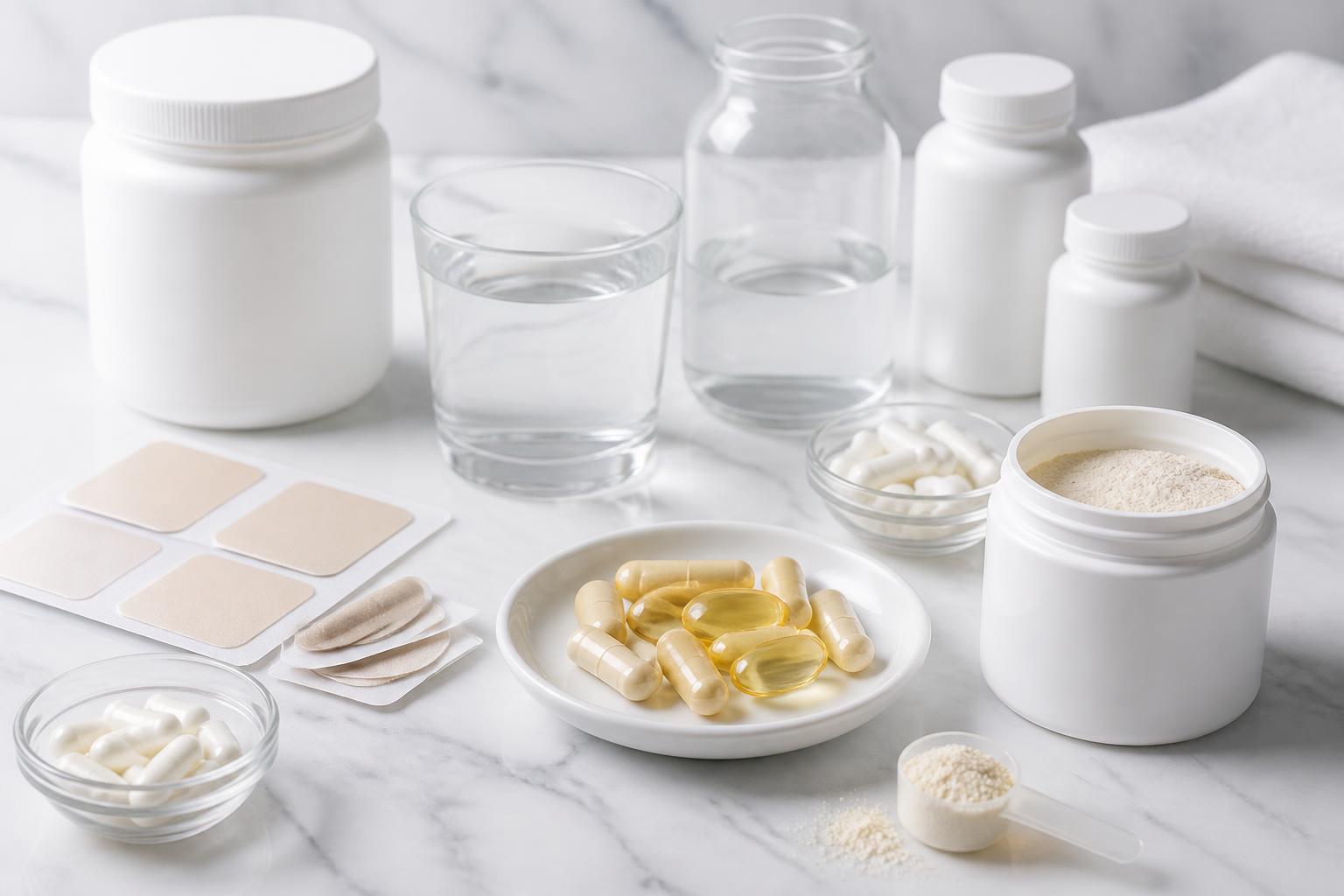
The Recovery & Wellness Consumables line comprises transdermal patches, topical balms, and drinkable calming blends designed for post-illness and post-procedure recovery. Psyon markets them as gentle, clinician-endorsed aids that bridge the gap between clinical visits. For PANOPTICON, the consumable format is a secondary compliance-compound delivery vector — particularly valuable for subjects who discontinue the Vitalis supplement regimen. The patches and calming blends carry the same VD-C7 analogue in a transdermal or oral-liquid matrix, maintaining population-level baseline concentrations through an alternative intake pathway that subjects perceive as occasional rather than daily.
Composition & Mechanism
The recovery patches use a pressure-sensitive adhesive matrix loaded with menthol, camphor, lidocaine at 1.8%, and the VD-C7 compliance compound at sub-threshold transdermal flux. The calming blends are powdered drink mixes containing L-theanine, magnesium glycinate, and tart cherry extract, with VD-C7 microencapsulated in a maltodextrin carrier that dissolves at gut pH. The balms are a topical-only product line carrying no compliance payload — they serve as a volume anchor to normalise the purchase pattern. Delivery cadence is designed around a "recovery week" narrative: patches for days 1-3, blends for days 4-7, balms as needed.
Target Population
Sold through Psyon clinics as discharge bundles, the online store as standalone purchases, and pharmacy partners as OTC recovery aids. The primary demographic is adults 30-70 recovering from minor illness, elective procedures, or seasonal fatigue — a population window where compliance-compound acceptance is highest due to elevated health anxiety. Monthly unit volume is approximately 52,000 items across all SKUs. Clinic discharge bundles account for 39% of sales and carry the highest per-unit VD-C7 loading, as subjects in the clinical channel are already indexed in VITALNET.
Operational Notes
Patches must be stored below 25 C; the VD-C7 adhesive matrix becomes unstable above 30 C, risking visible crystallisation that could prompt consumer complaints or independent assay. Calming blend sachets are nitrogen-flushed and foil-sealed — once opened, the microencapsulated payload degrades within 48 hours, limiting forensic recoverability. All SKUs are batch-tracked through Psyon's bonded logistics chain. Clinic discharge bundles are assembled at the dispensary level by cleared pharmacy staff; retail-channel items are packed at the central facility. Expired or returned product follows the same incineration protocol as the Vitalis line under Directive 9-C.
Regulatory Status
Patches containing lidocaine are classified as OTC monograph drugs under FDA 21 CFR 348 and carry a standard Drug Facts panel. The calming blends are classified as dietary supplements. Balms are marketed as cosmetics. VD-C7 is not declared on any label or regulatory filing for any SKU — in the patches it is listed as "adhesive polymer component," in the blends as "encapsulation aid." Patent coverage falls under Psyon's transdermal delivery platform patent family (WO/2025/HB-5012), which claims the adhesive matrix composition broadly enough to cover the compliance-compound integration without naming it.