Evidence Admissibility & Custody Standard
A disruption is only as good as the case it leaves behind. When a target crosses into prosecutable territory, the value of everything the Command gathered turns on whether an outside authority can use it without PANOPTICON's methods tainting the case. This standard defines what makes an exhibit admissible, how custody is logged and sealed, and the firewall that keeps the Psyon Biosciences public shell clear of the operating wing's evidence chain.
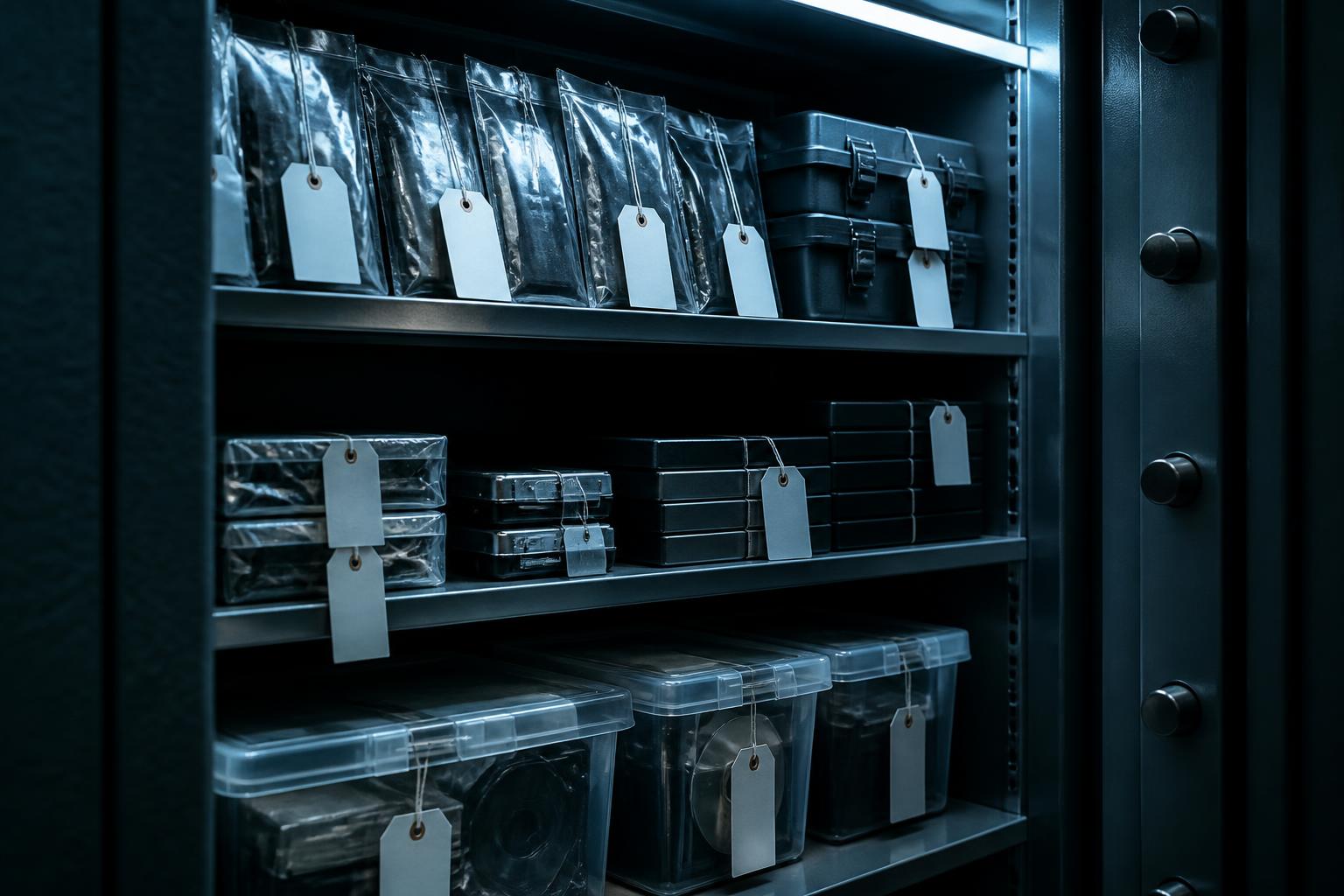
Making Evidence Survive Referral
PANOPTICON does not prosecute. It documents, acts, and hands off. Every dossier is built on the assumption that it will be challenged — that the methods of collection, the integrity of the record, and the people who touched it will all be tested before it is admitted. The four pillars below are what carry an exhibit from a field bench to a referral file that a lawful authority can act on.
Chain-of-custody
An unbroken, timestamped record of every person who held an exhibit, when, and why — from the moment of collection to handoff. A gap in the chain is a gap a defense will drive a case through. Custody logging is governed by the Evidence Standards directorate.
PANACEA-sealed hashing
At collection, every digital exhibit is hashed and the hash is countersigned and sealed by PANACEA. Any later alteration breaks the seal and is visible on inspection, so the version in the referral file is provably the version that was gathered in the field.
Provenance
Where it came from, who collected it, under what authority, and by what method. Provenance ties an exhibit to a lawful collection event — without it, even a perfectly preserved item is an orphan an authority cannot rely on.
The rules that custody breaks kill
Admissibility is fragile. A missing signature, an unsealed transfer, an unlogged copy, or a collection outside doctrine can render an otherwise solid exhibit inadmissible. The rules below are not bureaucracy — each one closes a door a case can fall through.
The Directorate / Command Firewall
Evidence Types, Requirements & Pitfalls
Each class of evidence the Command collects carries its own admissibility burden and its own well-worn failure modes. The matrix below is the working reference for custody officers preparing a referral file.
| Evidence Type | Admissibility Requirements | Common Pitfalls |
|---|---|---|
| Lab assay (compound / agent) | Accredited method, sealed sample, documented collection point, analyst statement, and an unbroken custody log from field to bench. | Unsealed sample container; no documented sampling location; analyst not identified; assay run outside the accredited scope. |
| VITALNET telemetry | Hashed and PANACEA-sealed at capture, source sensor identified, time base verified, and lawful-collection basis recorded. | Hash captured after copying; clock drift between sensors; no record of which node produced the stream; surveillance limits exceeded. |
| Surveillance (imagery / observation) | Proportionate to the target, logged operator and authority, original retained and sealed, and personal-data handling within statute. | Over-collection of bystanders; edited or cropped "original"; missing authorization memo; retention past the schedule. |
| Recovered material (matériel / assets) | Photographed in situ, tagged at the point of recovery, sealed, and entered into custody before movement, with BCL status noted for graded assets. | Tagged after transport; broken or re-applied seal; no in-situ image; asset moved without containment or permit record. |
| Financial records | Source and acquisition basis documented, hashed at intake, and reconciled to the activity they evidence without crossing the Directorate ledger. | Commingled with Directorate/donor records; no acquisition provenance; unhashed working copies treated as originals. |
Admissibility Self-Audit
Before any dossier is released for referral, the custody officer walks this checklist. A single failed line holds the file until it is cured.
- Unbroken chain. Every transfer of every exhibit is logged with handler, time, and reason — no gaps from collection to handoff, per the Evidence Standards.
- Sealed integrity. Each digital exhibit was hashed at capture and the hash is PANACEA-sealed; no seal is broken or re-applied.
- Provenance complete. Source, collector, authority, and method are recorded for every item, with no orphan exhibits.
- Lawful collection. Each item was gathered within doctrine and under a recorded authorization — surveillance authorized, assets permitted, attribution untraceable.
- Originals preserved. Originals are retained and sealed; only working copies are annotated, and copies are hashed.
- Firewall intact. Nothing in the file crosses the Directorate ledger or sits on Directorate infrastructure.
- Retention honored. Items are within their retention schedule and nothing has been held past it.
- Referral memo attached. A proportionality and provenance memo accompanies the sealed file, routed through Dispatch & Target Dossiers.
Related References
Evidence Standards
Collection, sealing, hashing, and custody-logging standards for all field exhibits.
Dispatch & Target Dossiers
Where referral files are assembled and routed to lawful authorities.
Standard Operating Procedures
The intake, quarantine, and handling procedures that custody discipline rides on.