PMDA Clinical Programmes - Osaka
Clinical trial management and PMDA regulatory liaison for the Asia-Pacific region. Officially registered as the "Psyon Biosciences Japan K.K. Clinical Operations Centre" within the Osaka Saito Life Science Park. The facility runs the Directorate's Japanese and broader APAC clinical programmes, manages the regulatory relationship with Japan's Pharmaceuticals and Medical Devices Agency, and houses a 28-bed Phase I/II clinical-trial ward where Halo implant cohorts and reformulated compound studies are conducted under Directorate-controlled protocol design.
Purpose & Mission
Osaka is the Directorate's clinical-trial engine for the Asia-Pacific region. Japan's PMDA operates the most rigorous pharmaceutical review process in Asia — slower than the FDA, more conservative than the EMA, and historically resistant to foreign-sponsored trial designs. The Directorate cannot simply import FDA approvals into the Japanese market; PMDA demands Japan-specific clinical data generated under Japanese Good Clinical Practice standards and reviewed by Japanese ethics committees. The Osaka facility exists to produce that data on the Directorate's terms.
The facility accomplishes three objectives. First, it runs the clinical trials that generate the PMDA submission packages for Psyon products — Compound-7, Lumira, Somnara, and the Halo neural implant. Second, it manages the long-term regulatory relationship with PMDA reviewers and advisory-board members through a cultivation programme modelled on the Bethesda playbook but adapted to Japanese institutional culture, where influence operates through sustained personal relationships and consensus-building rather than revolving-door hiring. Third, it serves as the Directorate's primary site for APAC-specific reformulation studies — modifying dosing profiles, compound ratios, and delivery mechanisms to account for pharmacogenomic variation in East Asian populations.
Physical Description
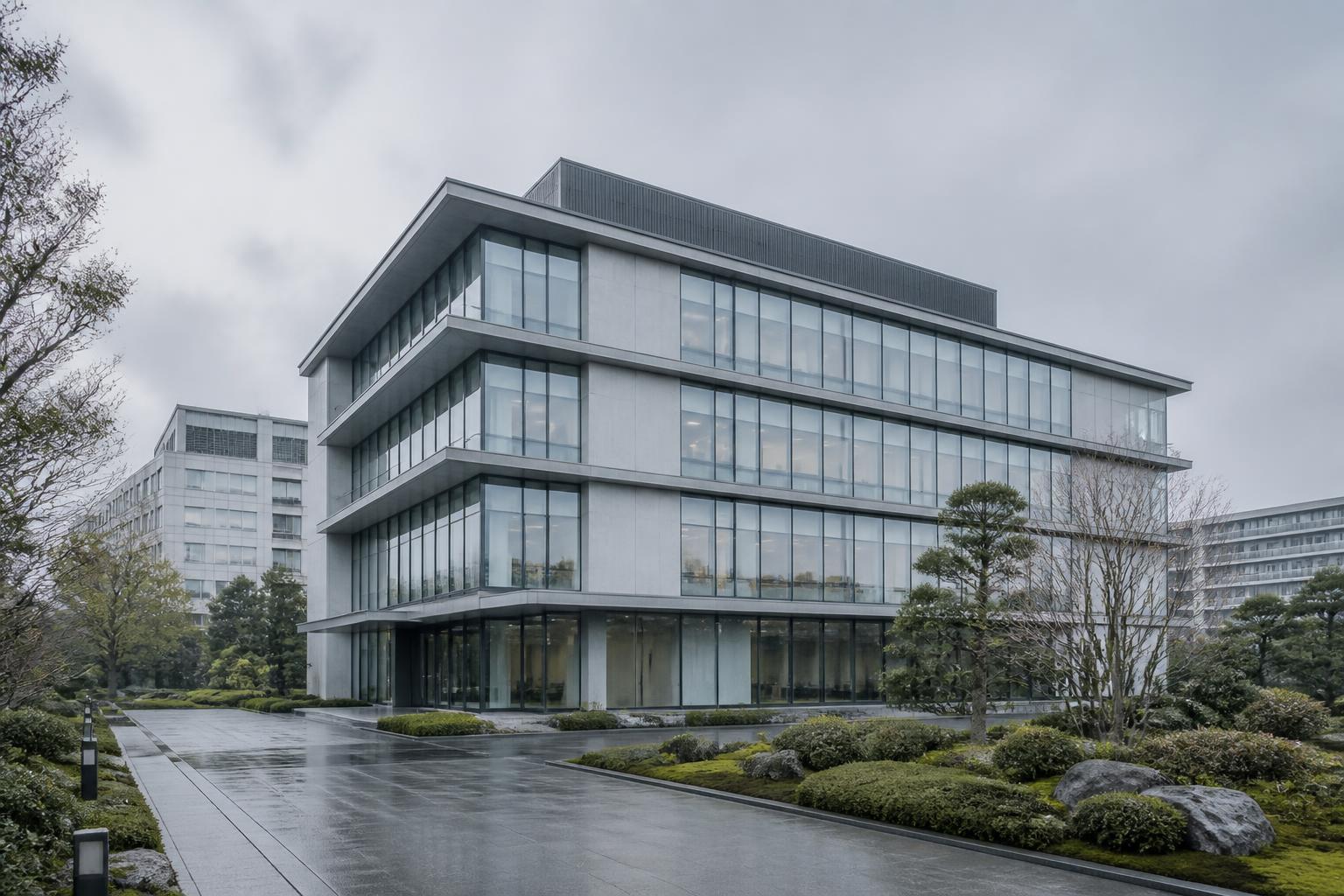
The facility occupies a four-story research building within the Saito Life Science Park, a biomedical campus in northern Osaka Prefecture developed by the Osaka prefectural government to attract pharmaceutical R&D investment. The campus hosts legitimate tenants — contract research organisations, university-affiliated labs, and mid-tier domestic pharma firms — making a foreign pharmaceutical company's clinical-operations office entirely routine.
Floors 1–2 — Clinical Ward & Trial Operations. The ground and first floors contain the 28-bed Phase I/II clinical-trial ward, subject intake and screening facilities, a pharmacy dispensary, a sample-processing laboratory, and the trial-operations centre where study coordinators manage active protocols. The ward is rated BCL-2, reflecting the presence of investigational pharmaceutical products and biological samples. The environment is designed to pass PMDA inspection: documentation, informed-consent processes, adverse-event reporting, and subject-safety monitoring all conform to J-GCP standards. What the inspectors do not see is the classified telemetry layer — Halo-equipped trial subjects stream cortical and biometric data directly to PANACEA through the Synaptic Data Fabric, and dose adjustments are informed by population models that the ethics-committee-approved protocol does not describe.
Floor 3 — Regulatory Affairs & Liaison. The PMDA liaison team, medical-writing staff, and the regulatory-strategy group occupy the third floor. This is the facility's public-facing layer — PMDA reviewers, ethics-committee members, and academic key-opinion leaders are received here. Conference rooms are configured for pre-submission meetings and advisory consultations.
Floor 4 — Directorate Overlay. The secured fourth floor houses the classified operations staff: the APAC clinical-programme coordinator, the pharmacogenomics analysis team, and the influence-operations cell responsible for PMDA relationship management. The floor operates behind biometric access control and is not accessible to commercial-cover staff or external visitors. Directorate communications and PANACEA terminal access are confined to this floor.
Key Systems
Clinical Trial Management System (CTMS). A dual-layer system. The outer layer is a PMDA-compliant electronic data capture platform that generates the submission-ready datasets, adverse-event reports, and safety narratives required for marketing-authorization applications. The inner layer — accessible only from the fourth floor — captures the classified trial endpoints: behavioural-compliance indices, Halo telemetry correlations, and dose-response curves that feed PANACEA's population-dosing models. The two layers share the same raw data; they produce different reports for different audiences.
Pharmacogenomics Laboratory. A wet-lab and bioinformatics suite on the second floor, specialising in CYP enzyme polymorphism profiling, HLA typing, and metaboliser-phenotype classification for East Asian populations. The lab's output directly informs reformulation decisions — ensuring that Directorate compounds achieve the intended behavioural-modulation profile across genetically distinct population cohorts.
Synaptic Data Fabric — APAC Node. Osaka hosts the Asia-Pacific regional node of the Directorate's mesh data network, providing local-latency PANACEA access for the clinical-programme staff and encrypted replication to the Singapore core. The node also serves as the data relay for Halo implant telemetry from APAC trial subjects.
PMDA Relationship Management Platform. A classified system operating on the fourth floor that tracks the Directorate's cultivation of PMDA personnel: reviewer assignments, advisory-board rotations, grant-funded academic collaborators, and conference-circuit influence targets. The platform models PMDA decision pathways and flags points of leverage for each active submission.
Personnel & Security
Approximately 65 personnel are assigned to the Osaka facility. Of these, 22 hold Directorate-level clearance and operate with knowledge of the organisation's full mission and the classified dimensions of the clinical programme. The remaining 43 staff are commercial employees of Psyon Biosciences Japan K.K. — clinical research associates, study nurses, medical writers, and administrative staff — who believe they work for a foreign pharmaceutical company conducting standard clinical trials in the Japanese market.
Security is calibrated to Japanese norms, which favour discretion over visible hardening. The building's first three floors present as a conventional pharmaceutical research office — no uniformed guards, no visible access barriers beyond standard corporate badge readers. The fourth floor is secured behind a secondary access layer (biometric and Halo verification) that commercial-cover staff are told serves the company's "global data-privacy compliance requirements." Directorate security personnel are embedded in the facility-management team and are not identifiable to non-cleared staff or external visitors.
The facility's operational-security posture reflects the Japanese regulatory environment: PMDA conducts thorough but procedurally predictable inspections, and the clinical ward must withstand genuine scrutiny. The commercial operation is real, the trial subjects are real, and the J-GCP documentation is audit-ready at all times. The classified layer is insulated by architecture, not by obfuscation of the visible operation.
Operational Notes
The Osaka facility was commissioned in 2085, one year after the Rotterdam and Bethesda sites, as the Directorate expanded its regulatory footprint into the third major pharmaceutical jurisdiction. The decision to locate in Osaka rather than Tokyo was deliberate: the Saito Life Science Park offered purpose-built laboratory space and proximity to Osaka University's medical faculty (a source of key-opinion leaders and ethics-committee members), while maintaining distance from the concentrated regulatory and media scrutiny of the capital.
Japan represents a strategically distinct challenge for the Directorate. PMDA's "bridging study" requirements mean that US or EU clinical data alone cannot support a Japanese marketing authorization — Japanese-population data is mandatory. This makes Osaka operationally essential rather than merely convenient: without this facility, the Directorate cannot legally distribute Psyon products in Japan or access the Japanese Halo implant market.
The facility's PMDA cultivation programme has been the slowest of the three regulatory-capture operations (Bethesda, Rotterdam, Osaka) to produce results, reflecting the consensus-driven culture of Japanese regulatory institutions. Progress is measured in years of relationship investment rather than discrete influence events. The programme is now in its sixth year and has achieved reliable pre-submission access to PMDA review divisions — the stage at which trial designs can be shaped before formal filing.