NMPA Supply & API Source - Chengdu
Active pharmaceutical ingredient synthesis and Chinese regulatory compliance site, officially registered as "Psyon Biosciences (Chengdu) Pharmaceutical Co., Ltd." within the Chengdu National Bioindustry Base. The facility produces the intermediate and finished API that feeds the Directorate's global manufacturing chain — Rotterdam, São Paulo, and the Osaka clinical programme all depend on Chengdu's output. The co-located NMPA liaison office maintains the export-quality certifications and GMP registrations that allow Directorate compounds to transit Chinese customs and enter the global pharmaceutical supply chain without triggering regulatory scrutiny.
Purpose & Mission
Chengdu is the Directorate's upstream chemical engine. The global pharmaceutical industry sources the majority of its active pharmaceutical ingredients from China and India; the Directorate is no exception, but with a critical difference — the compounds synthesised here contain a classified specification layer that does not appear on any export certificate or Certificate of Analysis. Chengdu produces the APIs for Compound-7, Lumira, Somnara, and several black-label formulations, synthesised to a dual standard: the published pharmacopoeia specification that satisfies NMPA and importing-country regulators, and the classified behavioural-modulation specification that satisfies PANACEA's population-dosing models.
The facility's second function is regulatory. China's National Medical Products Administration controls API export through a certification regime that, if mishandled, can freeze an entire supply chain. The Chengdu NMPA liaison team maintains the registrations, handles inspections, and — through a cultivation programme adapted to the Chinese regulatory environment — ensures that the Directorate's export certificates are renewed without the auditing depth that might reveal the gap between the published and classified compound specifications.
Physical Description
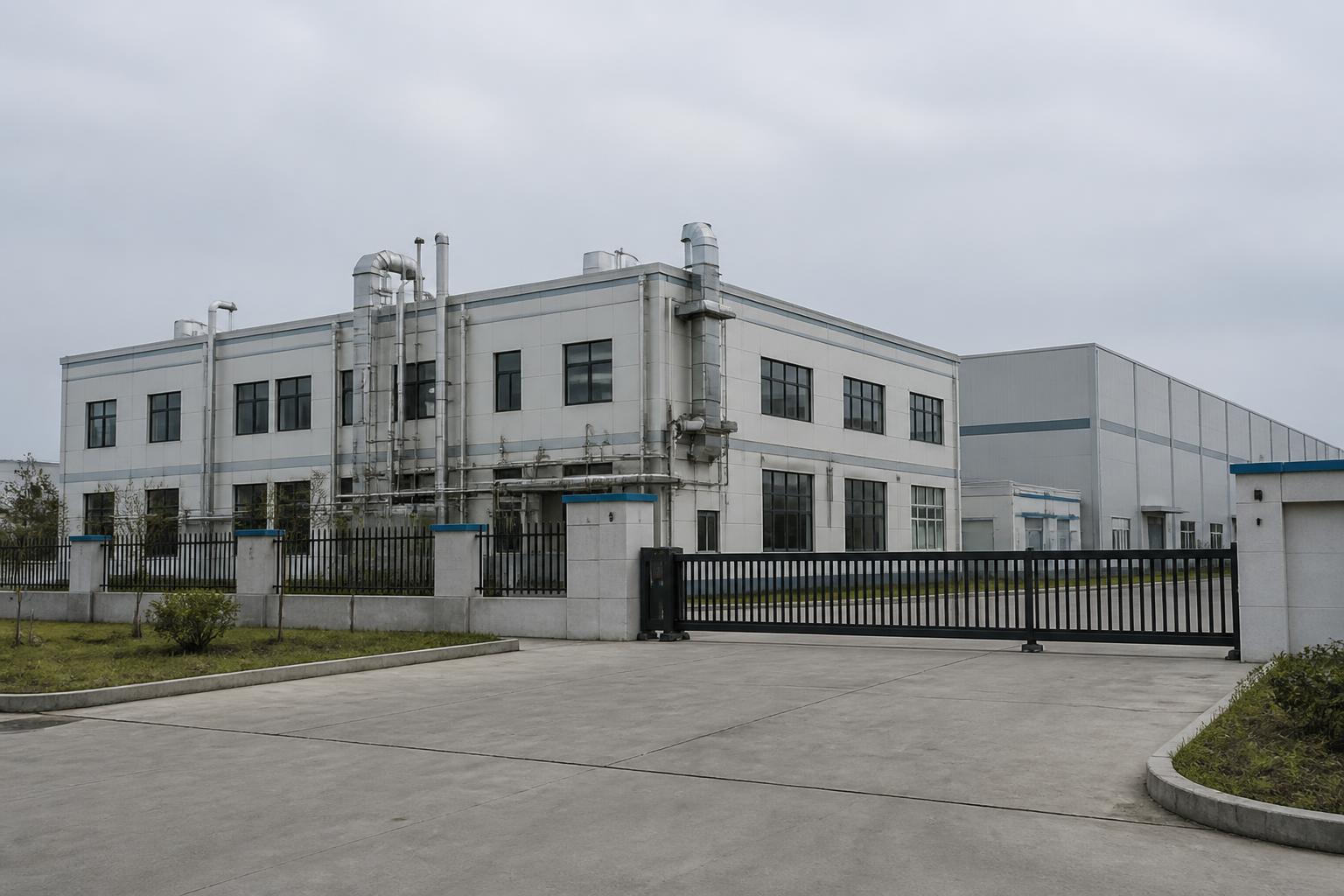
The facility occupies a fenced campus within the Chengdu National Bioindustry Base, a government-designated pharmaceutical and biotech development zone in the Wenjiang district, approximately 25 kilometres west of Chengdu city centre. The campus contains three principal structures: the synthesis plant, the quality-control and warehousing block, and the administrative building.
Synthesis Plant. A two-story GMP-rated chemical manufacturing facility containing four independent reaction lines. Lines 1 and 2 produce intermediate compounds — the multi-step organic synthesis that converts commodity precursor chemicals (sourced from the Hyderabad precursor facility and domestic Chinese suppliers) into the penultimate-stage intermediates. Lines 3 and 4 perform final-stage API synthesis and purification — the steps that produce the finished active ingredients shipped to Rotterdam and São Paulo. Each line operates as a self-contained clean environment with dedicated solvent recovery, waste treatment, and in-line analytical monitoring (HPLC, GC-MS, Karl Fischer titration). The plant is rated BCL-2.
QC & Warehousing Block. Adjacent to the synthesis plant. The quality-control laboratory performs batch-release testing against both the published pharmacopoeia specification and the classified Directorate specification. Finished API is stored in temperature-controlled warehousing pending export shipment. The block also houses the packaging and documentation team that prepares the dual paperwork — NMPA export certificates and Certificates of Analysis for the published spec, classified batch reports for Singapore.
Administrative Building. A three-story office building at the campus entrance. The ground floor houses reception, the NMPA liaison office, and the commercial management team. The second floor contains the operations-planning group and the logistics coordination desk. The secured third floor — the Directorate overlay — houses the classified supply-chain coordination staff, the PANACEA terminal, and the influence-operations cell managing the NMPA relationship. The third floor operates behind biometric access and is not accessible to commercial-cover employees.
Key Systems
Reaction Lines 1–4. Four independent continuous-flow synthesis lines with automated process control, in-line spectroscopic monitoring, and real-time yield tracking. Combined monthly capacity: 1,800 kg of finished API across all active compounds. Process parameters are set from Singapore via encrypted instruction sets that embed the classified compound specifications within the standard batch-recipe format — production operators execute the recipes without visibility into the behavioural-modulation targets the parameters are designed to achieve.
Dual-Specification QC System. The quality-control laboratory operates two parallel analytical workflows. The first produces the NMPA-compliant Certificate of Analysis — the document that accompanies every export shipment and confirms the API meets published pharmacopoeia standards. The second, run by cleared QC staff on the third floor, tests against the classified Directorate specification and reports results directly to PANACEA. A batch that passes the published spec but fails the classified spec is rejected and recycled; NMPA never sees the rejection.
Supply-Chain Coordination Platform. A logistics management system that coordinates inbound precursor shipments from Hyderabad and domestic Chinese suppliers, production scheduling across the four reaction lines, and outbound API shipments to Rotterdam (sea freight via Shanghai), São Paulo (air freight via Hong Kong), and Osaka (domestic courier). The platform integrates with PANACEA's demand-forecasting module to adjust production volume against population-dosing projections.
Synaptic Data Fabric — China Node. Chengdu hosts a regional node of the Directorate's mesh data network, providing local-latency access to production telemetry, batch-tracking data, and PANACEA dashboards for the classified operations staff. The node operates on a dedicated encrypted link to Singapore that does not transit China's commercial internet backbone.
Personnel & Security
Approximately 190 personnel are assigned to the Chengdu facility. Of these, 30 hold Directorate-level clearance and are aware of the organisation's full mission and the classified dimension of the API programme. The remaining 160 are commercial employees of Psyon Biosciences (Chengdu) — process chemists, chemical engineers, QC analysts, warehouse operators, logistics staff, and administrative personnel — who operate under the genuine belief that they work for a foreign-invested pharmaceutical manufacturer producing APIs for the global market. This is true; it is not the whole truth.
Security follows a model adapted to the Chinese operating environment, where visible foreign-company security measures attract attention rather than deflect it. The campus perimeter security is provided by the Bioindustry Base's shared estate-management company — standard for all tenants and unremarkable. Internal access control uses commercial badge systems on the first two floors of the administrative building. The third floor operates behind a secondary biometric layer presented to non-cleared staff as a "data-privacy compliance zone" required by Psyon's European parent company. Directorate security personnel are embedded within the facility-management and IT teams.
The facility operates under Chinese law and is subject to NMPA inspection. The Directorate's NMPA cultivation programme in Chengdu is structurally different from the Bethesda and Osaka models: regulatory relationships in China operate through institutional networks and government-industry liaison structures rather than individual-level cultivation. The Chengdu team's influence operates through the Bioindustry Base's industry association, through co-funded research partnerships with Sichuan University's pharmaceutical faculty, and through the commercial credibility that comes from being a consistent, compliant, tax-paying tenant in a government priority zone.
Operational Notes
Chengdu was commissioned in 2085, one year after the Rotterdam manufacturing site, to verticalise the Directorate's supply chain. Before Chengdu, the Directorate sourced API through arms-length contracts with Chinese and Indian generic manufacturers — an arrangement that provided no control over synthesis parameters and created unacceptable supply-chain risk for compounds with classified specifications. The decision to build a captive API facility was driven by a 2084 supply disruption in which a contracted Chinese manufacturer modified a synthesis route without notification, producing an API batch that met pharmacopoeia standards but fell outside the classified behavioural-modulation window. The batch was caught by Rotterdam QC and destroyed, but the incident demonstrated that the Directorate could not rely on external suppliers for compounds whose critical parameters are invisible to the supplier.
Chengdu's relationship with the Hyderabad precursor facility is complementary: Hyderabad produces the upstream precursor chemicals and early-stage intermediates; Chengdu performs the final multi-step synthesis and purification that converts those intermediates into finished API. This division of labour reflects both cost economics (precursor synthesis is labour- and solvent-intensive; India's cost base is lower) and regulatory geography (finished API export from China carries NMPA certification that simplifies import clearance at Rotterdam and São Paulo).
The facility's most sensitive operational risk is the Chinese state's periodic interest in foreign pharmaceutical companies operating within its borders. The Directorate's response is proactive compliance: Psyon Biosciences (Chengdu) pays its taxes, employs local staff, co-funds academic research, and participates visibly in the Bioindustry Base's industry activities. The best defence against state scrutiny is being a model tenant whose operations are exactly what they appear to be — up to the point where they are not.